Quick answer: Fur fabric is a soft, fluffy textile with raised fibers on a knitted or woven base, used in fashion, soft toys, home decor, accessories, and winter products. Most fur fabric sold today is faux fur—an affordable, cruelty-free alternative to natural fur that comes in many types, including short hair, long hair, Sherpa, curly, and mink-look varieties.
Fur fabric has earned a permanent place in fashion, home decor, and the toy industry because it delivers warmth, softness, and a premium look without the cost or ethical concerns of real animal fur. From cozy winter jackets to cuddly teddy bears and luxurious sofa throws, this versatile material shows up almost everywhere.
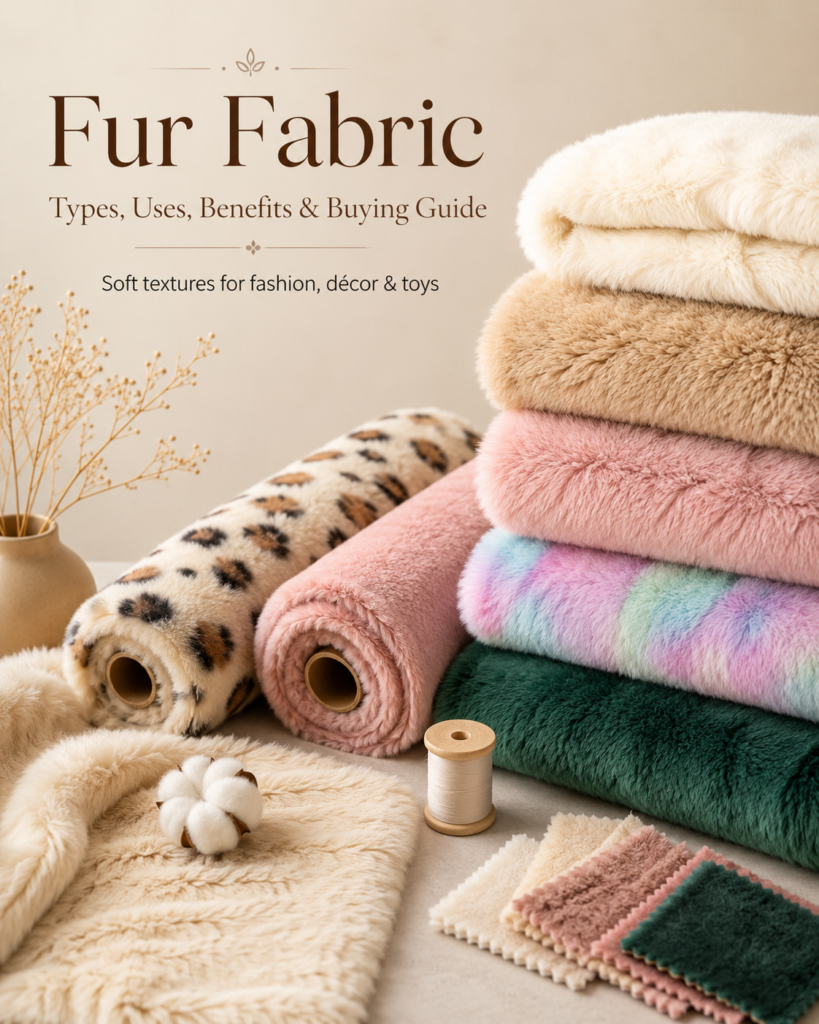
Today, faux fur fabric leads the market. It’s stylish, budget-friendly, and available in countless colors, textures, and pile lengths. Whether you run a garment factory, manufacture soft toys, design interiors, or supply fabric in bulk, understanding fur fabric helps you make smarter buying decisions.
In this guide, you’ll learn what fur fabric is, the main types available, how it’s made, its key uses and benefits, and how to choose the right fabric for your products. You’ll also find practical buying tips for bulk orders, care advice, and answers to the most common questions buyers ask.
What Is Fur Fabric?
Fur fabric is a soft textile designed to look and feel like animal fur. It has a fluffy, plush surface with raised fibers that give it a warm, premium texture. Run your hand across it and you’ll feel the same softness you’d expect from real fur—but it’s made from textile fibers instead.
Every piece of fur fabric is built from a few core parts:
- Base fabric (backing): The foundation layer, usually knitted or woven, that holds everything together.
- Raised fibers (pile): The soft, fur-like fibers that stand up from the base.
- Pile length: The height of those fibers, which can range from very short to long and flowing.
- Finishing: The brushing, dyeing, and treatments that give the fabric its final look and feel.
There are two broad categories. Natural fur comes from animals and is rarely used in modern manufacturing due to cost and ethical concerns. Artificial fur—commonly called faux fur fabric—is made entirely from synthetic fibers like acrylic, polyester, and modacrylic. Faux fur now dominates the market because it’s affordable, cruelty-free, and available in far more varieties than natural fur.
History & Evolution of Fur Fabric
For centuries, people wore natural fur for one simple reason: warmth. Fur coats, hats, and linings kept communities alive through harsh winters long before central heating existed. Fur also became a symbol of status and luxury, worn by royalty and the wealthy.
As textile technology advanced, manufacturers found ways to recreate the look and feel of fur using synthetic fibers. This shift gave rise to faux fur fabric. Early versions were stiff and limited in variety, but modern production methods changed everything.
Today’s artificial fur fabric is soft, realistic, and produced in a huge range of colors, textures, and pile lengths. Better machinery and improved fibers made it more affordable and far more versatile than natural fur ever was.
Growing demand for cruelty-free and ethical fashion accelerated this change. Many brands, designers, and buyers now prefer faux fur because it avoids harming animals while still delivering style and comfort. This combination of ethics, affordability, and variety is why fur fabric has become a go-to material across so many industries.
Types of Fur Fabric
Fur fabric comes in many varieties, each suited to specific products and uses. Choosing the right type starts with understanding what each one offers.
Short Hair Fur Fabric
Short hair fur fabric has a low pile, meaning the fibers are short and dense. The result is a smooth, neat surface that feels soft without looking too fluffy. It holds its shape well and is easy to cut and sew.
This type works best for soft toys, garment linings, collars, cushions, and decorative products. Its tidy finish makes it ideal for items that need clean detailing.
Long Hair Fur Fabric
Long hair fur fabric has longer, flowing fibers that create a fluffy, luxurious appearance. It looks rich and feels plush, which gives any product a high-end feel.
It’s a popular choice for jackets, coats, rugs, throws, and premium home decor. When you want a product to look glamorous and feel cozy, long hair fur fabric delivers.
Faux Fur Fabric
Faux fur fabric is the most popular modern option, and for good reason. It recreates the look of real fur using synthetic fibers, making it affordable and accessible.
Buyers love faux fur because it’s available in endless varieties, costs far less than natural fur, and is cruelty-free. For most businesses today, faux fur fabric is the practical, ethical, and budget-friendly choice across nearly every product category.
Sherpa Fur Fabric
Sherpa fur fabric has a soft, wool-like texture that mimics sheep’s fleece. It’s warm, lightweight, and gentle against the skin.
This makes it perfect for hoodies, winter jackets, blankets, and baby products. Its cozy feel and insulating quality make Sherpa a favorite for cold-weather items.
Curly Fur Fabric
Curly fur fabric features a curled, textured surface that adds character and visual interest. The curls give it a playful, distinctive look.
It’s commonly used for teddy bears, plush toys, designer garments, and creative products. If you want texture and personality, curly fur fabric stands out.
Printed Fur Fabric
Printed fur fabric carries patterns like animal prints, designer prints, or custom designs printed directly onto the pile. This opens up creative possibilities without limiting you to solid colors.
It’s a great fit for costumes, bags, fashion pieces, and decorative products. Printed fur lets manufacturers add bold style and customization.
Rabbit Fur-Look Fabric
Rabbit fur-look fabric is prized for its ultra-soft, smooth finish that closely resembles real rabbit fur. It feels delicate and gentle to the touch.
This makes it ideal for baby products, soft toys, luxury accessories, and linings. When softness is the top priority, rabbit fur-look fabric is hard to beat.
Mink Fur-Look Fabric
Mink fur-look fabric offers a premium, smooth, and elegant appearance that imitates the sleek shine of mink fur. It feels luxurious and looks sophisticated.
It’s often chosen for coats, cushions, high-end fashion products, and luxury home decor. For products that need to feel exclusive, mink fur-look fabric adds instant value.
How Fur Fabric Is Made
Understanding the production process helps buyers judge quality and ask the right questions. Here’s how fur fabric typically comes together, step by step.
- Fiber selection: Manufacturers choose synthetic fibers such as acrylic, polyester, or modacrylic based on the desired softness, durability, and look.
- Knitting or weaving: The base fabric is created using knitting or weaving machines, forming the backing that holds the pile.
- Pile creation: Fibers are added and raised to form the soft, fur-like surface. Pile length is controlled during this stage.
- Brushing and finishing: The fabric is brushed to align the fibers, creating a smooth, even, and natural-looking pile.
- Dyeing and printing: The fabric is dyed to the required color, and patterns are printed if needed.
- Quality checking: Each batch is inspected for softness, even pile, shedding, color consistency, and backing strength.
- Rolling and packaging: The finished fabric is rolled and packaged, ready for shipping to buyers and manufacturers.
Each step affects the final quality. Careful fiber selection and proper finishing are what separate premium fur fabric from low-grade material.
Key Features of Good Quality Fur Fabric
Not all fur fabric is created equal. When evaluating fabric—especially for bulk orders—look for these signs of quality:
- Soft hand feel: The fabric should feel smooth and pleasant to the touch.
- Even pile height: Fibers should stand at a consistent length across the entire surface.
- Strong backing: A sturdy base prevents tearing and supports stitching.
- Low shedding: Quality fabric loses very few fibers when handled or brushed.
- Good color fastness: Colors should stay vibrant and resist fading after washing.
- Smooth finishing: The surface should look clean, neat, and well-brushed.
- Durable stitching support: The backing must hold stitches without coming loose.
- Consistent thickness: The GSM (grams per square meter) should be uniform across the roll.
- Premium shine and texture: A natural luster signals a higher-grade fabric.
Checking these features before placing a large order can save you from costly quality issues later.
Uses of Fur Fabric
Fur fabric’s versatility is one of its biggest strengths. It appears across many industries and product types.
Fashion & Garments
Fur fabric is a staple in winter fashion. It’s used for jackets, coats, hoodies, collars, cuffs, scarves, caps, and other winter wear. Fur fabric for jackets adds warmth and a stylish, premium finish that customers love.
Soft Toys & Plush Products
The toy industry relies heavily on fur fabric for soft toys. Teddy bears, animal toys, kids’ plush products, and decorative toys all use it. Soft fur fabric makes these products huggable, safe, and appealing to children.
Home Decor
Interior designers use fur fabric for home decor to add comfort and luxury. Common applications include cushions, rugs, sofa throws, blankets, chair covers, and other decorative pieces. Fur fabric instantly makes a space feel cozy and upscale.
Accessories
Fur fabric adds flair to accessories like bags, slippers, keychains, hairbands, earmuffs, and other fashion items. A small fur detail can elevate the look of an everyday product.
Costumes & Event Decoration
Fur fabric is popular for fancy dress, stage costumes, theme events, photo booths, and creative decoration. Its variety of colors and textures makes it perfect for eye-catching, custom designs.
Baby Products
Soft, gentle fur fabric—especially rabbit fur-look and Sherpa varieties—is used for baby blankets, soft mats, warm clothing, toys, and comfort products. Softness and skin-friendliness matter most here.
Benefits of Fur Fabric
Why do so many businesses choose fur fabric? The advantages are clear:
- Soft and comfortable: It feels gentle and pleasant against the skin.
- Warm and cozy: It provides excellent insulation for winter products.
- Premium appearance: It gives products a rich, high-end look.
- Many colors and textures: It’s available in a wide range of options.
- Easy to cut and stitch: Manufacturers can work with it efficiently.
- Suitable for multiple industries: From fashion to toys to decor, it fits many uses.
- Cost-effective: Faux fur costs far less than natural fur.
- Cruelty-free: Faux fur fabric harms no animals.
- Adds luxury value: It boosts the perceived value of finished products.
These benefits make fur fabric a smart, flexible material for manufacturers and buyers alike.
Fur Fabric vs Faux Fur Fabric
Buyers often ask about the difference between natural fur and faux fur fabric. Here’s a clear comparison.
Natural fur comes from animals, while faux fur fabric is made from synthetic fibers like acrylic and polyester. This basic difference shapes everything else.
- Cost: Faux fur is significantly cheaper than natural fur, making it more practical for large-scale production.
- Ethics: Faux fur is cruelty-free, while natural fur raises animal welfare concerns.
- Maintenance: Faux fur is easier to clean and care for. Natural fur often requires specialized handling and storage.
- Availability and variety: Faux fur comes in far more colors, textures, and pile lengths than natural fur.
For modern businesses, faux fur fabric is the more practical choice. It balances affordability, ethics, and variety—exactly what manufacturers and wholesalers need for consistent, large-scale production.
How to Choose the Right Fur Fabric
Choosing the right fur fabric depends on your product and your quality standards. Use this checklist when selecting fabric:
- Match the product type: Different products need different fabrics. A teddy bear and a winter coat call for very different pile and softness.
- Check pile length: Short pile suits detailed items; long pile suits luxury products.
- Test softness: Feel the fabric to confirm it meets your comfort needs.
- Inspect backing quality: A strong base supports stitching and durability.
- Check shedding: Gently brush the fabric to see how many fibers come loose.
- Review color and pattern: Confirm the color matches your design and stays consistent across the roll.
- Check GSM and thickness: Make sure the weight suits your product.
- Confirm stitching compatibility: Ensure the fabric works well with your machines.
- Ask for a sample first: Always request a fabric sample before placing a bulk order.
- Choose a trusted supplier: Work with a reliable fur fabric supplier or manufacturer who delivers consistent quality.
Following these steps reduces risk and helps you get exactly what your products need.
Fur Fabric for Different Industries
Fur fabric serves different needs depending on the industry. Here’s how various businesses use it.
Garment Manufacturers
Garment makers use fur fabric for jackets, coats, hoodies, and winter wear. They need consistent softness, reliable color, and fabric that’s easy to stitch at scale.
Toy Manufacturers
Toy companies depend on safe, soft fur fabric for soft toys, teddy bears, plush toys, and kids’ products. Low shedding and skin-friendly softness are top priorities.
Interior Designers
Designers use fur fabric for home decor like cushions, rugs, throws, and decorative pieces. They look for premium textures and colors that complement interior styles.
Event Companies
Event and production companies use fur fabric for costumes, stage decoration, and theme-based events. Variety, bold colors, and creative textures matter most here.
Exporters and Wholesalers
Exporters and wholesalers need bulk availability, a wide color range, and consistent quality across large orders. Reliable supply and dependable lead times are essential for their business.
Fur Fabric Care & Maintenance Tips
Proper care keeps fur fabric looking soft and fresh for years. Share these tips with customers or follow them in production:
- Wash gently: Use a gentle cycle or hand wash to protect the fibers.
- Avoid hot water: Hot water can damage the pile and backing.
- Use mild detergent: Harsh chemicals can ruin the fabric’s softness.
- Avoid direct heat: Keep the fabric away from heaters and dryers.
- Air dry naturally: Let the fabric dry on its own to preserve its texture.
- Brush gently after drying: A soft brush restores the fluffy look.
- Store in a dry place: Moisture can damage the fibers over time.
- Avoid heavy ironing: High heat will flatten and melt synthetic fibers.
- Spot clean small stains: Treat minor marks without washing the whole piece.
Good care protects your investment and keeps finished products looking their best.
Common Mistakes to Avoid While Buying Fur Fabric
Bulk buyers can lose time and money by overlooking key details. Avoid these common mistakes:
- Buying without checking a sample: Always test before committing to a large order.
- Ignoring backing quality: Weak backing leads to tearing and stitching problems.
- Choosing the wrong pile length: The wrong pile can ruin the look of your product.
- Not checking shedding: High shedding causes quality complaints.
- Ignoring color consistency: Uneven color across rolls creates production headaches.
- Buying only on low price: Cheap fabric often means poor quality and higher costs later.
- Not checking supplier reliability: An unreliable supplier can disrupt your entire production.
- Not confirming bulk availability: Make sure your supplier can meet your full order volume.
Avoiding these mistakes leads to smoother production and better finished products.
Why Choose a Reliable Fur Fabric Supplier?
The right fur fabric supplier does more than sell fabric—they support your business. Here’s what a dependable supplier offers:
- Quality consistency: Every roll meets the same high standard.
- Wide color and texture options: A broad range to match any product.
- Bulk availability: Enough stock to fulfill large orders on time.
- Customization support: Help with specific colors, patterns, and pile lengths.
- Better pricing: Competitive rates for wholesale and bulk buyers.
- Timely delivery: Reliable lead times that keep your production on schedule.
- Proper fabric recommendation: Expert guidance on the best fabric for your needs.
- Long-term business support: A partner you can rely on order after order.
Choosing the right fur fabric manufacturer protects your quality, your timelines, and your reputation.
Final Thoughts on Choosing Fur Fabric
Fur fabric is a soft, stylish, and versatile material that fits countless products. It powers winter fashion, soft toys, home decor, accessories, and baby products—all while offering warmth, comfort, and a premium look. Faux fur fabric, in particular, gives modern businesses an affordable and cruelty-free option without sacrificing quality.
The key to great results is choosing the right fabric. Pay attention to softness, backing, pile length, thickness, color consistency, shedding, and finishing. These details directly affect the quality of your finished products and the satisfaction of your customers.
Looking for high-quality fur fabric in bulk? Contact us today for samples, color options, pricing, and wholesale supply. Our team is ready to help you find the perfect fabric for your products and support your business every step of the way.
Frequently Asked Questions
What is fur fabric used for?
Fur fabric is used across many industries. Common applications include fashion garments like jackets and coats, soft toys such as teddy bears, home decor items like cushions and throws, accessories, costumes, and baby products. Its softness and premium look make it popular for both functional and decorative uses.
Is faux fur fabric better than real fur?
For most modern businesses, faux fur fabric is the better choice. It’s far more affordable than real fur, completely cruelty-free, easier to clean and maintain, and available in many more colors and textures. Real fur involves higher costs, animal welfare concerns, and specialized care, making faux fur the more practical option.
Which fur fabric is best for soft toys?
Short hair fur fabric and rabbit fur-look fabric are excellent for soft toys. Both offer softness, low shedding, and a clean finish that’s safe and appealing for children’s products. Curly fur fabric is also a popular choice for textured plush toys like teddy bears.
Can fur fabric be washed?
Yes, fur fabric can be washed, but it needs gentle care. Use a gentle wash cycle or hand wash with mild detergent, avoid hot water and direct heat, and let it air dry. Brushing it gently after drying restores its soft, fluffy texture. Avoid heavy ironing, which can damage synthetic fibers.
How do I choose good quality fur fabric?
Look for a soft hand feel, even pile height, strong backing, low shedding, good color fastness, and consistent thickness. Always request a fabric sample before placing a bulk order, and work with a trusted fur fabric supplier who can guarantee consistent quality across large quantities.
Is fur fabric suitable for jackets?
Yes, fur fabric is widely used for jackets and coats. Long hair fur fabric and mink fur-look fabric add warmth and a luxurious appearance, while Sherpa fur fabric provides cozy insulation. Fur fabric for jackets is a popular choice in winter fashion for both style and comfort.
Can I buy fur fabric in bulk?
Yes. Many fur fabric suppliers and manufacturers offer wholesale and bulk supply. When ordering in bulk, confirm color consistency, request a sample first, and choose a reliable supplier who can guarantee stock availability and timely delivery for large orders.
What is the difference between short hair and long hair fur fabric?
Short hair fur fabric has a low, dense pile that creates a smooth, neat surface—ideal for soft toys, linings, and detailed products. Long hair fur fabric has longer, flowing fibers that look fluffy and luxurious, making it better suited for jackets, coats, rugs, and premium decor.